Design, Display
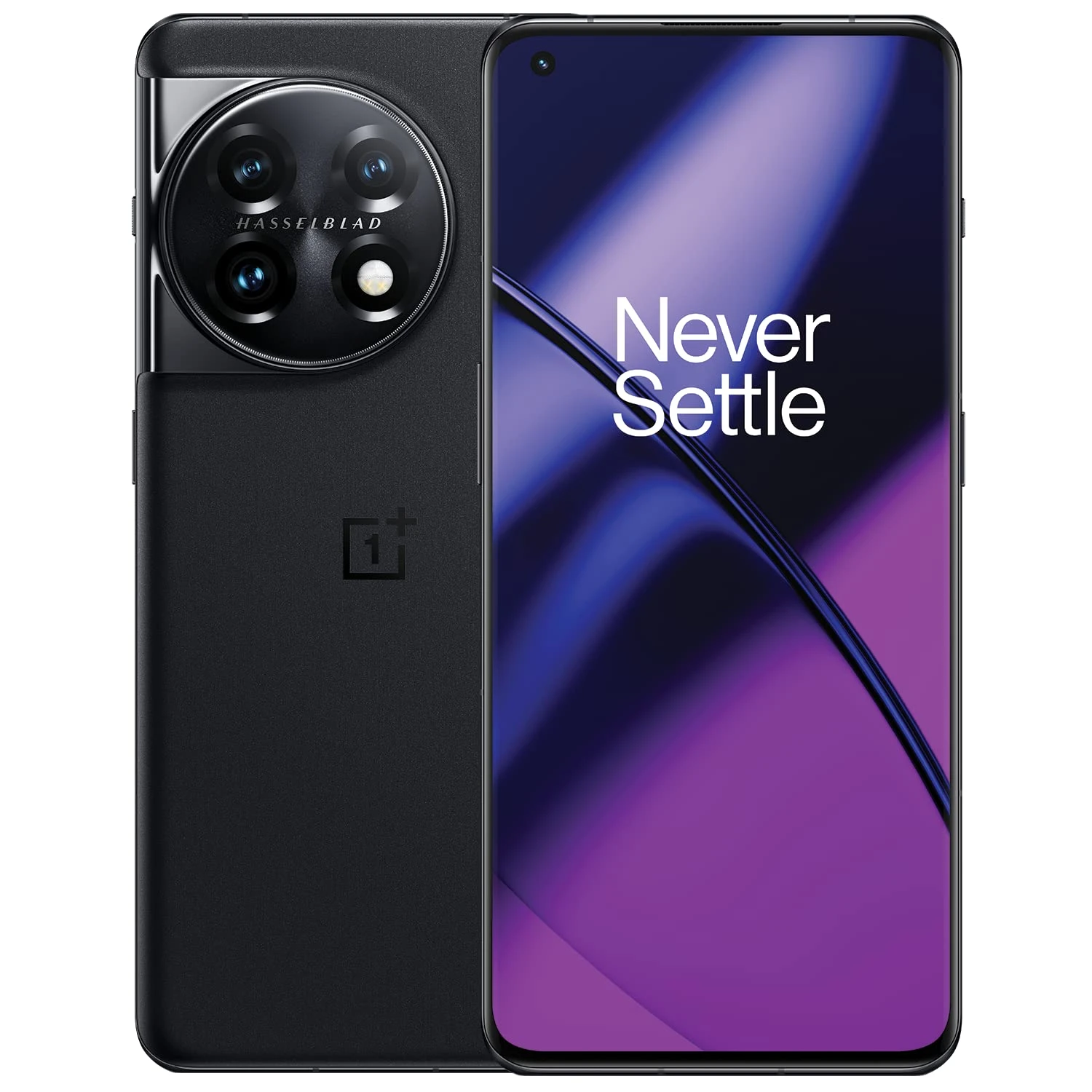
OnePlus 11 builds on the design of its predecessor and now features a circular camera module on the rear, placed at the left edge. The camera housing is still connected to the frames, which, by the way, are made of aluminum. The rest of the back is ceramic, and it also retains the classic alert slider.
On the front, there is a 6.7-inch Samsung E4 AMOLED display with QHD+ resolution. OnePlus says this is the true LTPO 3.0 display, enabling instant and seamless frame rate switches, up to 120 Hz.
Moreover, the smartphone comes with support for certifications like HDR and Dolby Vision. It is protected by Corning Gorilla Glass, and the screen also houses a fingerprint scanner for biometrics.
Cameras
Camera-wise, the OnePlus 11 has 50MP Sony IMX890 primary sensor along with a 48MP Sony IMX581 ultrawide. Similarly, there’s a 32MP Sony IMX709 telephoto lens with 2x optical zoom and an RGBW arrangement to increase the amount of light it captures. According to OnePlus, the RGBW arrangement increases light capture by 416%.
The smartphone also retains the Hasselblad camera optimization. To get the most out of this optimization, it comes with a 13-channel multi-spectral sensor, which will be used specifically to output natural colors in photos. Not to forget, the primary camera also has OIS support. For selfies, the device has a 16MP sensor.
Others
Furthermore, OnePlus has partnered with AAC technologies to provide the world’s first bionic vibrating motor in a smartphone. It has a surface area of over 600 sq. mm and is said to offer better haptics than the iPhone 14 pro Max.
For audio, you get a dual speaker setup with support for Dolby Atmos. Likewise, fueling the smartphone is a dual-cell 2500mAh battery that supports 100W fast charging.
- Display: 6.7-inch E4 AMOLED, LTPO 3.0, 120Hz, Dolby Vision
- Resolution: QHD+ (3216 x 1440 pixels)
- SoC: Snapdragon 8 Gen 2 (4nm)
- OS: OxygenOS 13 based on Android 13
- Memory: Up to 16GB LPDDR5X RAM, 512GB UFS 5.0 storage
- Rear Camera: Triple;
– 50MP Sony IMX890 primary, OIS
– 48MP Sony IMX581 ultrawide
– 32MP Sony IMX709 Telephoto, 2x Optical zoom
- Selfie: 16MP
- Battery: 5000mAh
- Charging: 100W
- Biometric: Fingerprint (in-display)
- Audio: Dual-speakers
- Haptics: Bionic vibrating motor (600 sq. mm)
 english